Episode Three: Laura Mae Martin
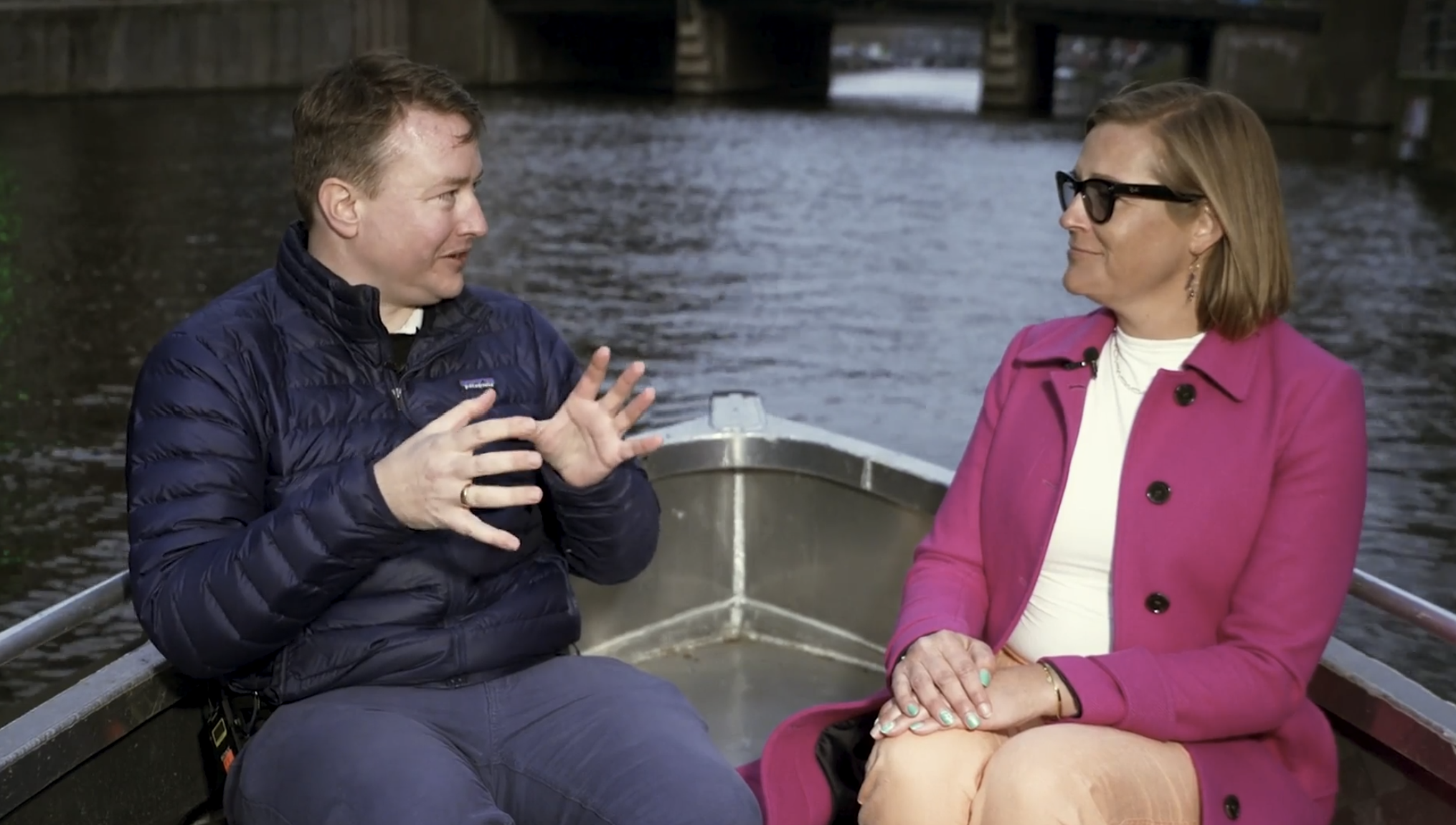
In this feature episode of the Passport to AI series with Google Cloud, host Savannah Peterson sits down in Charlotte, North Carolina, with Laura Mae Martin, Executive Productivity Director at Google and author of Uptime. Focusing on the kitchen—the heart of home management and executive coordination—the conversation explores how Laura balances coaching senior executives at Google with raising four children under seven years old. Laura shares actionable frameworks for energy management, practical AI hacks for daily life, and her philosophy on intentional living.
Laura’s Parenting Superpowers: Scarcity, Intentionality, and "Future You"
Laura’s parenting superpowers stem from a single core principle: scarcity breeds innovation. Managing four young children alongside a demanding corporate role leaves no room for passive scheduling. Instead of feeling overwhelmed by time constraints, Laura uses scarcity as a catalyst to build deliberate systems for both work and home.
The Coffee Test & Intentional Well-Being: Laura emphasizes that personal well-being never happens by accident. Wanting a peaceful hour to enjoy coffee in the morning requires intentional backwards planning—deciding when to wake up and establishing bedtime routines the night before.
Bridging the Gap to "Future You": Psychological research shows a mental disconnect between our current self and our future self, leading people to overcommit or procrastinate. Laura combats this by making decisions explicitly out of care for "Future You". Simple habits—such as packing school lunches the night before or declining non-essential meeting requests to protect a 30-minute break—serve as acts of service for her future self.
Starting Personal First: When building confidence with new tools, Laura advises starting with low-stakes personal tasks before applying them to high-pressure work assignments. Experimenting in daily life builds comfort and reduces resistance.
Real-World Parenting & Household Tech Hacks
Laura demonstrates how AI and digital productivity tools can streamline everyday domestic management, turning routine chores into efficient, stress-free workflows:
Aisle-by-Aisle Grocery Mapping: Using Google Keep, Laura maintains running grocery lists categorized by store. Before a trip, she prompts AI to organize the list aisle-by-aisle based on the layout of a specific store location. This generates an exact route, eliminating wandering through aisles with young children.
Dynamic Meal Planning & Recipe Adjustments: Laura leverages AI to scale recipes (e.g., adjusting a recipe for two up to six portions) and find allergy-friendly ingredient substitutions without compromising taste.
Contextual Memory & Visual Analysis:
Skincare Routine: Laura snapped a photograph of products on her bathroom counter and asked AI to determine the optimal application order and check for conflicting ingredients.
Contextual Reasoning: When asking AI about unexpected bumps on her leg, the tool recalled that she had queried a beach trip packing list two weeks prior, correctly inferring that the marks were sand flea bites.
Workplace Productivity Hacks & Strategic Mindset Shifts
Laura translates her home management strategies into high-impact systems for senior executives, addressing calendar overload and workplace friction:
The Surfer vs. The Wave: With technological tools constantly evolving, Laura encourages focusing less on mastering every individual product update and more on becoming a flexible "surfer" who adapts smoothly to new developments.
Zero-Based Calendaring: Inspired by zero-based accounting, Laura advocates re-evaluating recurring calendar commitments from a blank slate. Rather than attending meetings out of habit, professionals should ask: "If someone invited me to this recurring meeting today, would I accept it?" (She applies this same logic to "zero-based closeting" by treating her wardrobe like a retail store).
Executive Jet Lag Plans: Google executive Philip Schindler uploads his complete travel itineraries into AI models to generate customized recovery plans. The system identifies peak jet lag windows, schedules workouts, designates no-meeting compression blocks, and outlines optimal sleep schedules.
Reading the Manual ("The Dishwasher Analogy"): Referencing her father-in-law—who reads dishwasher manuals to pack dishes with maximum efficiency—Laura urges users to explore settings, customize notification schedules, and learn tool features upfront to gain decades of compounding efficiency.
Overcoming Procrastination & Managing Energy Rhythms
A central theme of Laura’s philosophy is aligning work types with natural energy fluctuations rather than treating all working hours as equal:
Strategic Peak vs. Creative Flow: Peak morning hours are ideal for high-focus strategic work. Conversely, lower-energy afternoon periods are suited for creative flow, editing, and softer brainstorming, as energy arrives in bursts during relaxed states.
Stopping in the Middle: To break friction when starting long projects or writing, Laura stops mid-sentence or mid-chapter when she knows exactly what comes next. Returning to an incomplete thought the following day eliminates starting resistance.
Acting Like Your Own Assistant: Overcome procrastination by setting up a "prepared environment" ahead of time. Laying out running shoes, setting out paint brushes on newspaper, or opening required documents the night before creates immediate momentum.
Theming Days & Meals: Structuring time around themes minimizes context switching. At work, this means assigning half-day or full-day themes (e.g., Product Day, 1:1 Coaching Day). At home, meal themes like "Meatless Monday" or "Crockpot Tuesday" streamline weekly decision-making.
Uptime Philosophy & The Future of Work
In her book Uptime, Laura counters traditional "busy culture," asserting that "balance is the new busy" and that constant back-to-back schedules reflect poor system design rather than high performance.
Productivity is Personal: Laura treats productivity strategies like a "sushi menu"—individuals should select and apply specific tools that target their unique pain points rather than forcing a rigid, one-size-fits-all framework.
Capturing Real-Brain Messiness: Effective task lists must reflect real life, capturing high-level work presentations alongside personal chores like fall soccer registration in one unified capturing system.
Intentionality in the AI Era: As AI tools automate multi-step processes and define clearer workflows, Laura emphasizes that saving time is only half the equation. Individuals and organizations must actively decide how to reinvest saved hours—whether into deep strategic thinking, personal well-being, or family time—to avoid letting empty space fill with superficial tasks.
Key Takeaways
Scarcity Drives Innovation: Constraints force intentional choices in time and tool usage.
Protect Future You: Make decisions today that ease friction for tomorrow.
Align Work with Energy: Reserve peak hours for strategic tasks and lower-energy blocks for creative flow.
Customize Your System: Select productivity methods selectively to serve your personal goals.